
Saturday, July 18, 2009

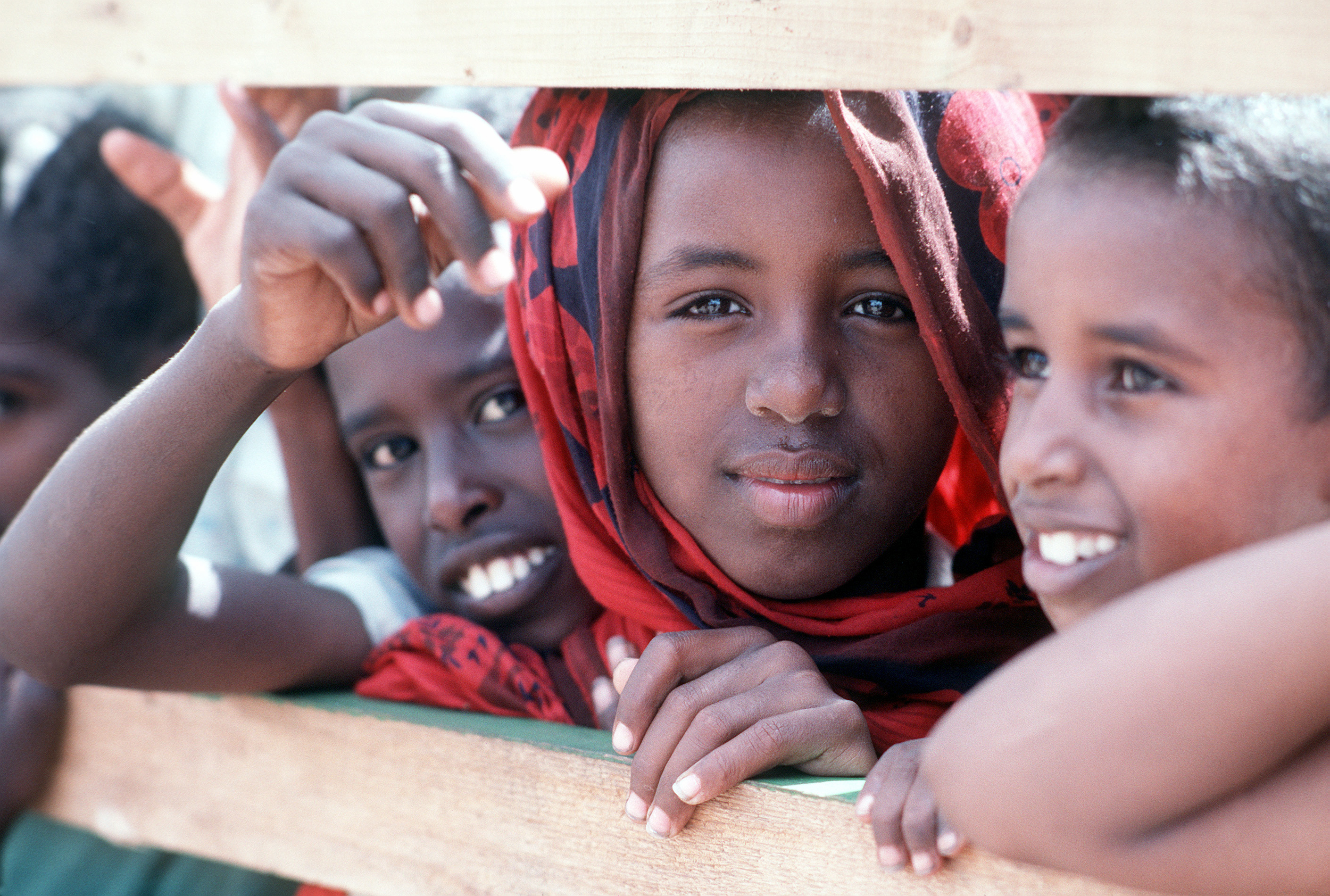
Displaced Somalis Need Water and Sanitation


Aid agencies in Somalia are asking for $11 million to give the hundred of displaced people, due to fighting in the capital, emergency water and sanitation, according to the United Nations Office for the Coordination of Humanitarian Affairs (OCHA).

Over 200,000 people have left Mogadishu since early May when violence erupted due to tensions between the Government and the opposition Al-Shabab and Hisb-ul-Islam groups.

OCHA reported that more than 600,000 displaced people, settled in the Afgooye corridor outside Mogadishu, desperately needed water, sanitation and hygiene services.

Currently, Aid agencies are only able to supply two to eight liters of water per person per day in that area, while between 7.5 and 15 liters—less than one flush of an average toilet—is considered the bare minimum required for survival.

There is also only one latrine for ever 212 displaced people in the Afgooye corridor.

A primary concern is that the lack of water may have adverse effects on the efforts to prevent the spread of communicable diseases in overcrowded situations.

-- Jaimie Hwang

Source: UN News Centre

Friday, July 17, 2009

GSK “Positive Action for Children Fund” to fight HIV/AIDS in sub-Saharan Africa


GlaxoSmithKline is a research-based pharmaceutical company that is working to “improve the quality of human life by enabling people to do more, feel better and live longer.” The “Positive Action for Children Fund” will grant up to $80 million over a ten-year period to NGOs and those who work to prevent mother-to-child transmission of HIV/AIDS.

GSK will also contribute $16 million toward a public-private partnership for researching antiretroviral drugs. This fund will help find new beneficial fixed dose combinations for those suffering from HIV/AIDS. In addition, it will help lower the cost of treatment by entering into a voluntary license agreement with the South African abacavir manufacturer, Aspen Pharmacare Ltd.

Since 2001, GSK has agreed to 8 voluntary licenses for antiretroviral manufacturing in Africa. This allowed for more choices and greater security of supply of antiretroviral drugs within Africa, resulting in 279 million tablets of Epivir and Combivir provided to patients during this period. By continuing in this fashion with the development of the “Positive Action for Children Fund,” treatment will be made available to people with HIV/AIDS in the poorest nations.

Thursday, July 16, 2009

President Obama Gives Speech in Ghana


President Barack Obama arrives to speak to the Parliament of Ghana in Accra, Saturday, July 11, 2009. (AP Photo/Haraz N. Ghanbari)


During U.S. President Obama’s visit to Ghana, the 44th President spoke in front of Ghana’s Parliament on June 11. In his speech, Obama praised Africa’s achievements, offered warnings and charity as well.

Ghana is one of Africa’s leading economic countries, which has demonstrated impressive rates of growth in its economy alongside countries like Botswana and Mozambique. However, Obama also noted the terrible conditions in countries like Zimbabwe, Sudan, Congo and Liberia where financial collapse is a very real threat and violence is a daily occurrence.

The President committed $63 billion to a comprehensive global strategy excluding the Global Poverty Act, which is another part of the United Nations’ Millennium Development Goals. The bill would commit $854 billion, over the course of eleven years.

In relation to the bill, then Senator Obama stated, “We can – and must – make it a priority of our foreign policy to commit to eliminating extreme poverty and ensuring every child has food, shelter, and clean drinking water. As we strive to rebuild America’s standing in the world, this legislation will not only commit to reducing global poverty, but will also demonstrate our promise and support to those in the developing world."


-- Jaimie Hwang

Read Full Text of Obama's Speech Here.

Source: Digital Journal

Wednesday, July 15, 2009

President Obama Visits Ghana


President Obama made his first visit to sub-Saharan Africa on July 10-11, 2009, visiting Ghana after attending the G8 Summit in Italy. Obama is the third consecutive U.S. President to stop in Ghana, one of the top African nations that has consistently been reducing poverty and improving lives through economic growth.

Some Ghana stats:

  • Ghanaian citizens have participated in five consecutive peaceful transitions of power. (See an overview Ghanaian elections here.)
  • In 2004, the Ghanaian government announced the elimination of school fees for primary schools. This coupled with a new school feeding program, increased enrollment rates for primary school boys from 60% in 2004-2005 to 84% in 2007-2008, and girls from 58% to 82%.
  • Ghana currently receives funding from the Global Fund to Fight AIDS, Tuberculosis, and Malaria and is one of the 15 focus countries in the President's Malaria Initiative (PMI). PMI's work in Ghana aims to distribute more than one million bed nets, spray 100,000 houses with pesticides that kill mosquitoes carrying malaria, and to provide 1.2 million doses of malaria medicine to treat children under five.
  • Ghana has a 5-year, $547 million compact with the Millennium Challenge Corporation (MCC), focused on agriculture, rural development and infrastructure improvement. During President George W. Bush's visit to Ghana in 2008, then President Kafuor renamed a main highway in Accra (a project of the MCC) the "George W. Bush Highway."
  • Ghana has experienced 4-5% annual growth over the past 20 years, and has nearly halved its poverty rate since 1992, putting it on track to achieve the first Millennium Development Goal by 2015.
  • In 2007, Ghana was the United States' tenth largest trading partner in sub-Saharan Africa and the sixth largest exporter to the U.S. (Compare even more key development stats between Ghana, Sub-Saharan Africa and the U.S. here).

President Obama’s recent trip to Ghana showcases the country’s success story as a concrete example of how targeted smart aid, joined with good governance, can lead to noticeable, positive change.

-- Jaimie Hwang

Source: ONE


Tuesday, July 14, 2009

The Borgen Project to Host Open House on July 30th


Starting at 5pm on July 30th, The Borgen Project will be hosting an open house at our office in Pioneer Square for anyone who is interested in learning more about who we are, what we do, and what we're trying to accomplish. Please join us for an evening of conversation, hors d'oeuvres, and wine (non-alcoholic alternatives provided) at 110 Cherry St., Seattle, WA. We are located on the top floor.


Prevent Malnutrition


According to Nicolas de Torrente, the Executive Director of Doctors Without Borders U.S.A, in a letter to the editor of the New York Times, the quality of food children intake after the age of exclusive breast-feeding is just as important as the quantity. To maintain health and spurn growth, children between the ages of 6 and 24 months need energy from grains and fats, along with essential nutrients found in animal-source proteins like milk.

“In ‘malnutrition hot spots' like the Sahel, East Africa and South Asia, where most of the world's five million malnutrition-related deaths occur each year, poor families already struggle, and often fail, to provide their children with such varied diets,” said Torrente.

The director of Doctors Without Borders believes it is critical to improve the World Food Program’s ability to distribute general food as the global food crisis carries on.

“But increasing the quantity of food aid is not enough,” said Torrente. “Stemming and reversing the high rate of malnutrition-related deaths in the young should be a top priority.”

By providing “ready-to-use” nutrient-rich and dense foods as well as other nutritional supplements targeted to the specific needs of small children, Torrente is convinced of a promising impact.

“Enhancing existing food aid with these supplements may increase the global cost of food aid, but if the world truly seeks to contain this growing crisis, this cannot be seen as a luxury,” said Torrente.

-- Jaimie Hwang

Source: Doctors without Borders

Monday, July 13, 2009

A Glimpse Inside The Borgen Project Office


Borgen Project staffers work to mobilize people across the country, rallying support state-by-state for anti-poverty legislation.