Showing posts with label Food Crisis. Show all posts

Monday, July 25, 2011

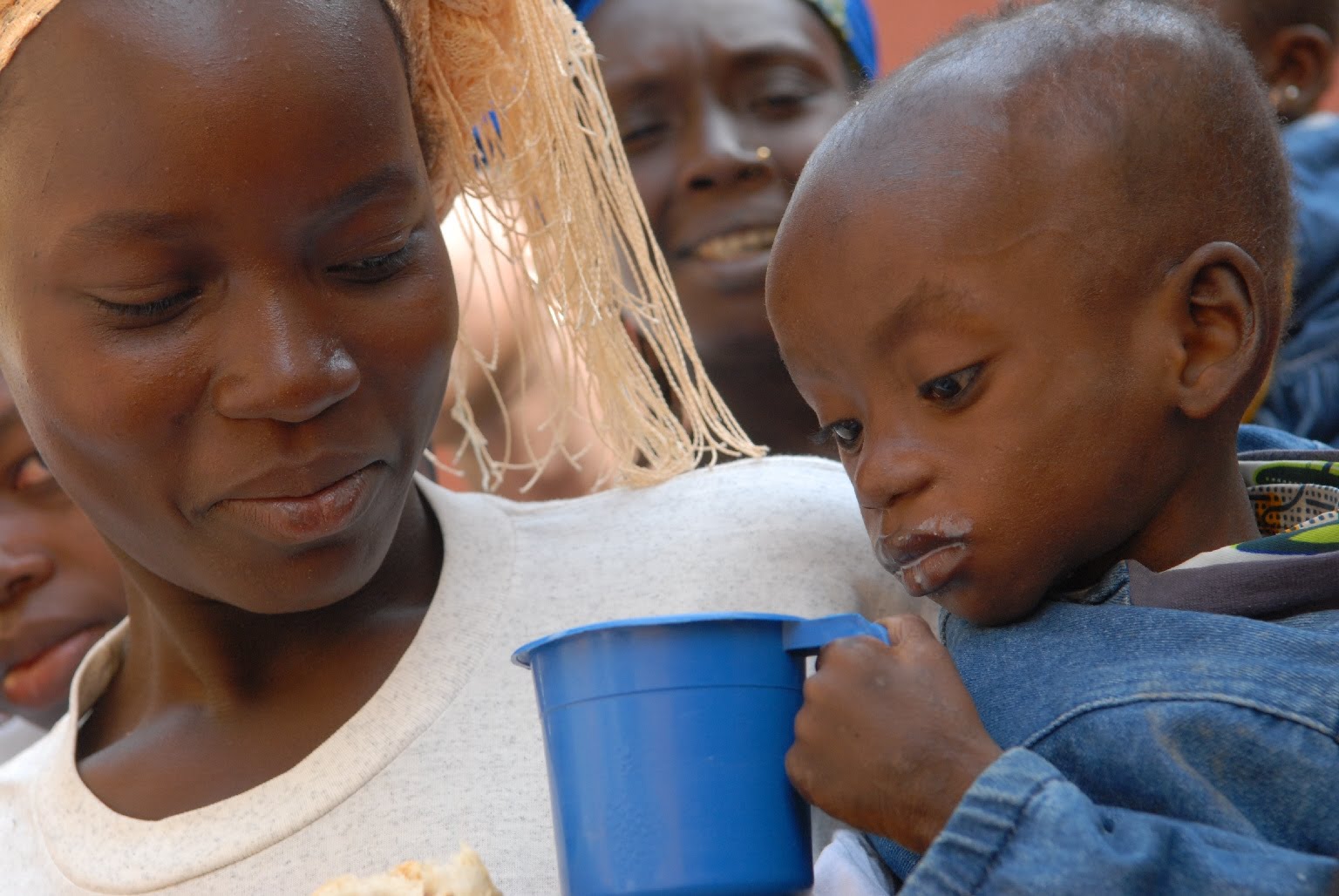
Food Crisis in East Africa Was Preventable


The drought in East Africa is a very severe humanitarian crisis. However, it highlights the underlying problems that people face in developing countries. Preventive measures are needed.

It was well known that the failing rains would affect farmers and communities. Yet governments did nothing to protect them. As a result, their lives are being devastated along with the well-being of the country.

The plans that were made to protect them, were not good enough. Harvests have failed and the number of livestock has fallen.

This food crisis was not inevitable and solutions exist to ensure that this type of crisis is avoided in the future. It should be a wake up call to other governments.

Governments and other organizations need to plan for the future now. This includes investing in small scale food producers, protecting land rights, and providing farmers with the support they need to cope with the changing climate. Communities need to have a say in these types of decisions, which strongly affect them.

"It is not a coincidence that the worst affected by this crisis are those who have been most neglected. In a world with enough to eat there is no good reason why anyone should go hungry."

-Gabrielle Gurian

SOURCE: OXFAM

Wednesday, July 21, 2010

UN Rural Development Arm Responds to Niger Food Crisis


The United Nations rural development arm has begun responding to a growing food crisis due to drought in Niger. Scant and irregular rainfall in Niger this last year has left 7.1 million people hungry. "We are responding quickly to refill the village granaries, as well as provide inputs such as seeds and small tools to be used for the upcoming planting season to increase the resilience of rural households to deal with a crisis of this scale," said Mohamad Béavogui, Director of the agency's West and Central Africa Division. Béavogui visited the country recently to identify what steps needed to be taken in the near future, beyond emergency assistance, to address the problems of food insecurity, malnutrition and rural poverty. To support long-term development in Niger, the UN International Fund for Agricultural Development (IFAD) is helping more than 50,000 women through cereal banks. These banks are traditionally built to store crops immediately after harvest to allow farmers to sell them later during the dry season when demand and prices are higher. In the past three decades, IFAD has sent $240 million in funding for eight different projects and programs in Niger. Earlier this month the UN World Food Program (WFP) announced that it would be doubling the amount of funding sent to the country.

- Clara Hill

Friday, January 22, 2010

“Food is strength, and food is peace, and food is freedom" - John F. Kennedy


50 years ago, John F. Kennedy spoke those words in reference to the impact food can make on those in the developing world and out of those few words was born the Food for Peace Program.

Since then, more than 3 billion people in 150 countries have benefited. Currently, the Food for Peace Program works with rural farmers in developing countries to educate and teach them how to better sow their crops and tend to their fields. In addition, it works to improve women's education about nutrition, resulting in healthier babies and children, as well as provides micro-nutrients, such as Vitamin A, iodine, zinc, and iron, that hungry children often lack.

Though there are many ways of providing food aid, Food for Peace's goal remains constant: to minimize hunger in the world so that people everywhere can enjoy active and productive lives and, ultimately, to ensure that one day no one needs food aid.

- Tiffanie Depew

SOURCE: USAID

Thursday, January 21, 2010

Helping Hand Delivers Food to the World's Poor


In response to the global economic crisis of 2007-2008, the United States has responded accordingly with an increase in funding to international relief organizations. The economic downturn has resulted in a severe spike in food prices around the world, making an already difficult situation for those in the developing world much worse.

According to the US Agency for International Development, many in the developing world spend 50-60% of their incomes on food, making it virtually impossible for families to rise above levels of daily subsistence.

In an effort to alleviate much of this burden and to help reach the objective of Millennium Development Goal #1, ending global poverty and hunger, the United States has teamed with numerous governmental and non-governmental organizations around the world to lessen the strain that rising food costs have placed on families within the developing world.

- Tiffanie Depew


SOURCE: USAID

Monday, August 17, 2009

Drought Resistant Rice in India


In the eastern part of the Jharkhand state in India, farmers are testing out Sahbhagi dhan, which is a drought resistant strain of rice that can survive for up to 12 days without rain. The rice was developed by a team effort of scientists from the International Rice Research Institute in Manila and the Central Rainfed Upland Rice Research Station in Hazaribag.

Farmers began testing the rice in 2006 and have had positive results. It would provide needed relief to cultivators that have suffered a particularly difficult year. A farmer from Singrawan, Bijay Kumar Singh, explains, “We've already lost 60 percent of our crop because of poor rainfall. If the rains come now, we would be able to take 30-35 percent of our paddy crop.”

With these types of advances, developing countries can attain better food security and have the possibility of boosting their economies through agricultural exports.
--Jessica Milstead

Source: bbc.co.uk

Friday, August 07, 2009

Nigeria Suffers from Unreliable Agriculture Output


Nigeria has some of Africa’s largest oil reserves and some of the nation’s most productive land, but the 140 million people of Nigeria suffer from hunger due to unreliable agriculture output.

According to David Hecht’s recent article in the Washington Post, Nigeria used to be a major agricultural exporter until oil was discovered off its coast in the 1970s. But as it rose to the world’s eighth-largest oil producing country, Nigeria’s large farms and plantations were overlooked. Today, according to the World Bank, around 90 percent of Nigeria’s agricultural output comes from unproductive small farms where most farmers have little or no access to fertilizers, irrigation or other modern technology. Many of these farmers don’t even produce enough food to feed their families.

Although the country has grown to be one of the world’s most important importers of food staples such as rice and wheat, about 39 percent of Nigerians younger than 5 suffer from moderate or severe malnutrition, according to UNICEF, while 65 percent of the population, around 91 million people, are considered “food insecure.” They may wake up one morning to discover that they have nothing to eat.

The good news is that Nigeria has endless agricultural potential. With its 3.14 million irrigable hectares of land, the World Bank reports that Nigeria is only currently using 7 percent of it. While large areas of farmland have turned into desert, more than half of the remaining hectares of arable land currently lie fallow.

-- Jaimie Hwang

Read more about Nigeria's food crisis here.

Source: Washington Post