Showing posts with label Budget Cuts. Show all posts

Wednesday, October 05, 2011

Reduction Expected for Foreign Aid Due to U.S. Financial Crunch


America's current state of financial distress is forcing the first significant cuts in overseas aid in nearly two decades. Advocates and officials believe that these measures reflect the country's decline in ability to influence the world.

In attempts to cap off the growing national debt, both the House of Rep. and the Senate have proposed cutting financing for the State Department and its related aid agencies. The sectors that will be impacted include: food and medicine for Africa, relief for disaster-affected areas such as Pakistan, and political and economic assistance for new democracies of the Middle East.

This financial predicament we are in threatens a foreign policy that emphasizes diplomacy and development, a complement to American military power. Also, it puts us a few steps back in the increase in foreign aid that President George W. Bush advocated for after the tragedies of September 11, 2001. With increase in international funding, hopes of reducing anti-American sentiment and roots of extremism would take place.

As quoted by Secretary of State Hillary Rodham Clinton, "There is a democratic awakening in places that have never dreamed of democracy. And it is unfortunate that it's happening at a historic time when our own government is facing so many serious economic challenges, because there's no way to have a Marshall Plan for the Middle East and North Africa."

Only one percent of the federal budget is allocated to foreign aid. With already a small budget, further cuts here puts our nation at a further disadvantage compared to our fellow wealth nations in providing international assistance. Needless to say, c
uts will be made to government programs across the board. But the funding for the State Department and foreign aid has proven to be the single largest cut to any one department with a reduction of $8 billion in April.

Representative Kay Granger, a Republican from Texas and chairwoman of the House appropriations subcommittee overseeing foreign affairs said that the financial crisis faced has cornered us to make "a fundamental change" in how the foreign aid is spent.

While the final budget may remain uncertain, it is needless to say that foreign aid will decline for a second year.

-Georisa Chang


Monday, August 08, 2011

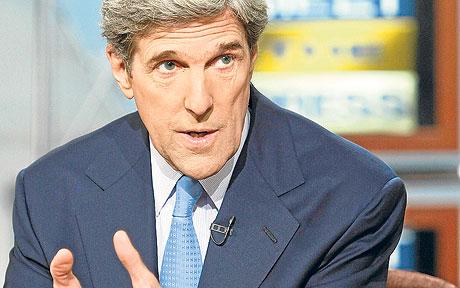
Sen. John Kerry On Foreign Aid


Sen. John Kerry recently wrote a piece as part of a leadership roundtable on US Foreign Aid. He wrote it in light of the crisis in Somalia.

He writes, "At this time of budget crisis, a United States senator defending foreign aid might well be advised to get examined by a political consultant if not a mental health professional. But right now it is more urgent than ever that those of us who believe in robust American leadership step up and articulate the dangers of American retrenchment."

He goes on to explain that many question whether the United States can afford foreign aid and development investments-- however, in reality, "it is that we can't afford not to."

He gives several reasons why. First, global leadership is a strategic imperative for America. It is not simply a favor we do for other countries. "It amplifies America's voice and extends our reach." In a world that is growing more and more interdependent, "slashing foreign aid is a formula for isolation and shrinking influence."

"America cannot just opt out of a networked world."

Is there a cost? Of course there is. However, all foreign aid programs, including sending diplomats to Afghanistan, reversing the HIV/AIDS epidemic in Africa and assisting Somalia during their recent devastating drought, add up to less than 1 percent of the annual budget. "It is a very small investment for such a great return."

"This year alone we will spend approximately $700 billion on our military. The entire international affairs budget is one-tenth of that. If you took the whole Foreign Service roster, you could barley staff one aircraft carrier." That is how little we spend on foreign aid.

Yet, diplomats are serving on front lines of multiple revolutions and wars and making extremely vital contributions in Afghanistan and Iraq.

"Surely, in a tax code spanning more than 72,000 pages of expenditures, many of which are proven to generate absolutely NO economic activity, we can find the cuts to preserve our investment in reducing security threats, in opening markets for American businesses and in creating opportunities for American leadership."

Kerry concluded with this statement. "Building our nations civilian capacity and providing our diplomatic corps with the essential tools to succeed in the demanding jobs we continually require of them is essential."

"To get the job done, we need our diplomats."

-Gabrielle Gurian


Wednesday, August 03, 2011

The Global Successes Of Foreign Aid!

The majority of America wonders this question, especially with the debates going on in Congress regarding budget cuts. Have there really been any global successes of foreign aid? Should we cut the US foreign aid budget? Would this help the economy?

The answer to the latter questions are NO! Foreign aid has produced amazing successes globally, improving the lives of those abroad and here at home in the US! Cutting aid is not the most beneficial route to economic stability.

Just look at the data!
  • During the 1990's hunger was cut in half in China
  • Investments in better seeds and sustainable agricultural practices have helped feed an extra 1 billion people in a short two years
  • In 2008, the WFP purchases 552,000 tons of food, which is the equivalent of giving 2.75 million people enough food for a year
  • The life expectancy of those in the developing world has increased by 33% from 45 years to 59.
  • Smallpox has been eradicated
  • Over the past 50 years infant and child death rates have been reduced by 50% in the developing world
  • Literacy rates are up 33% worldwide in the last 25 years
  • Primary school enrollment has tripled
  • More children go to school than ever before in history
  • Since 1990, 800 million people have gained access to improved water
  • Since 1990, 750 million people have access to improved sanitation

As people rise out of poverty, they become consumers of US products, boosting the US economy. Between, 1990 and 1993, US exports to developing countries increased by $46 billion. Today, 40% of US exports go to developing countries.

Overall, health conditions have improved in this time period more than any other in human history. Especially, thanks to USAID immunization programs, which save 3 million lives each year.

With such amazing improvements coming from less than 1% of our overall budget, how can the US even consider cutting foreign aid?

-Gabrielle Gurian

SOURCE: THEBORGENPROJECT