Showing posts with label Elections. Show all posts

Wednesday, November 03, 2010

A Post-Election Perspective


The United States held their midterm elections last night with the Republicans taking over the House of Representatives. Regardless of your political beliefs, these upcoming weeks are important for The Borgen Project as we encourage legislation to be passed in the upcoming lame duck session as well as begin forging important relationships with our newly elected Congressmen.

Although many people dismiss the lame duck session as a two month void where nothing gets accomplished except for the occasional necessary legislation, we believe that this is a vital time. We must work with our Representatives to pass the Water for the World Act before the new Congress begins. Even if your Representative was voted out of office, keep calling them and encourage them to act.

On the same page, it is important to develop a strong relationship with your newly elected Congressmen. As they begin their transition into office, e-mail them, explaining what The Borgen Project is and what their goals are. Encourage them to look over legislation that will aid the poorest of the poor. More than likely, they won't be able to take phone calls yet, but their campaign site will be using their campaign e-mails until January. Congratulate them on their victory. Be friendly, be polite, but let them know the importance of eliminating extreme poverty.

-Corey Cox

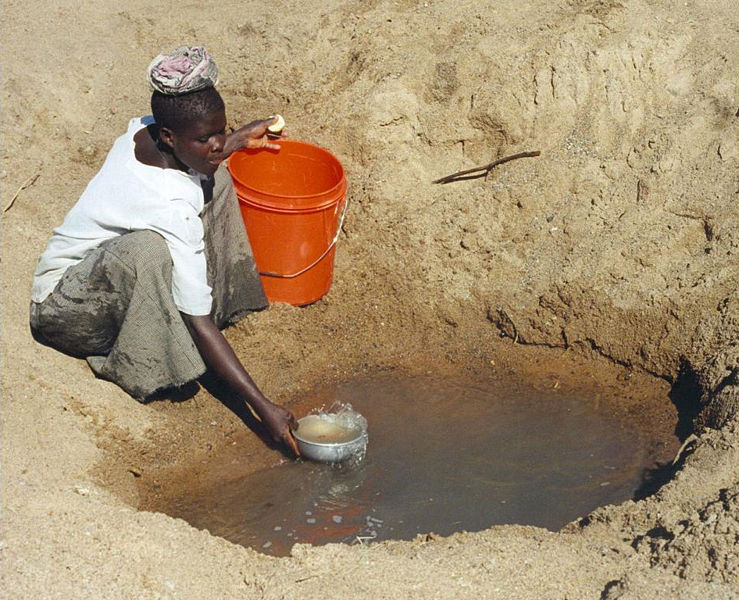
P.S. The amount of money spent on political advertisements this year? $3,000,000,000, enough to provide 300 million people water for ten years.

SOURCE: The Water Project

Friday, October 08, 2010

Taking Advantage of Elections


Congress has recently adjourned until after the midterm elections, and this means that your Senators and Representatives are touring their districts, appealing to voters to re-elect them. This is a prime opportunity to get in contact with your Congressmen and urge them to support bills that support the poorest of the poor.

Has your Representative co-sponsored the Paul Simon Water for the World Act, which has passed the Senate and now waits for the House of Representatives to act? Check out the list here. My Representative, Debbie Halvorson (D, Illinois-11), has not, and myself and a small group of citizens from her district are calling her weekly to remind her the importance of the act.

Have you committed to calling your Representative to action? Call them today! It only takes thirty seconds and could potentially impact millions of people who do not have access to clean drinking water.

-Corey Cox

SOURCE: The Library of Congress

Tuesday, August 31, 2010

Tanzania Works Toward Gender Equality


As election season draws near in Tanzania, the UN is taking steps to empower under-represented female candidates. In preparation for the October trip to the polls, the UN Development Fund for Women (UNIFEM) is offering workshops that focus on public speaking, campaign planning, community mobilization, media engagement, lobbying and advocacy.

In 2005, during the last general election only 17 of the 232 contested parliamentary seats were held by women, even though the nation's Constitution allocates 30 percent of such seats for females. Ni Sha, one of UNIFEM's Deputy Regional Programme Directors believes that it is time for women and men to "join hands to promote equal representation, participation and leadership of women in the political processes and representative institutions." UNIFEM is also working with journalists across the country to ensure that women receive adequate campaign coverage leading up to election day.

With the 2015 Millennium Development Goals (MDGs) deadline only a few years away, this program demonstrates Tanzania's efforts to achieve Goal Three, which is to promote gender equality and empower women.

-Devynn Patterson

Source: "Female candidates in upcoming Tanzanian polls to receive UN election training"-UN News Centre

Monday, June 28, 2010

Guinea Holds First Free Elections in West Africa


The first round of the Guinean Presidential elections took place yesterday, June 27th. The elections marked a turning point in Guinea's history, as it begins the process of leaving it's Junta-controlled past behind. Despite large deposits of minerals, the country ranks among the world's poorest nations, in part due to the military rule which has been in place for over 50 years.

Guinea's most recent democratic effort has had to overcome over 50 years of oppressive military rule. Guinea was freed from French colonial rule in 1958, but has since been ruled by a succession of military leaders through various hostile coups. The Captain Moussa 'Dadis' Camara government, which controlled Guinea from 2008-2009, garnered international attention in September 2010 when the military opened fire on pro-democracy demonstrators in Conakry Stadium. Over 150 people were killed and more than 1,000 were injured. In December later that year, Camara was shot by an aide and subsequently sent into exile. This allowed for Camara's Minister of Defense, General Sekouba Konate, to take over. Konate appointed an interim civilian prime minister and civilian led government that helped pave the way for the 2010 Presidential elections. Konate has promised that the military will remain in their barracks throughout the election and that they will back whoever wins.

There are long lines at the voting booths and no reports of violence so far. With an estimated 75-80% participation rate among eligible voters, the Guinean election appears to be a success so far. A second round of elections will be held on July 18th if no candidate from the June 27th election garners more than 50% of the popular vote.

-Matthew Thwaites


SOURCES: 'Guinea holds 1st free election'-Boston Globe, 'Guinea's first free election praised for transparency'- CNN

Tuesday, March 30, 2010

Democratic Election Possibilities Rise for Guinea


The United Nations reports that the necessary $27 million needed to conduct the first democratic election in Guinea has almost been realized thanks to international donors.
Since the country’s independence from France in 1958, it has been ruled by two consecutive dictators, the last – Lansana Conte, was killed in December of 2008, and the country has since been in a state of constant turmoil.

After massacres and military coups, the country is optimistic about holding its first presidential elections on June 27th.

The $27 million will be used to help with a census, purchasing ballot boxes and ballot papers, civic education campaigns, human rights sensitization, transportation and logistics.

The future democracy of Guinea will not only open electoral freedoms for the population, but will also recommit the U.N. and other international leaders to the deeply rooted humanitarian and developmental issues that remain prevalent in the country.

-Michelle Leung

Source: Africa Good News