Showing posts with label Success stories. Show all posts

Thursday, September 01, 2011

Success Story: Navyn Salem and Plumpy'Nut


One of the greatest advancements in curing and preventing malnutrition in both children and adults goes by the name of Plumpy'Nut--a ready-to-eat concoction that combines peanut butter, powdered milk, sugar, minerals, and vitamins. Children on the brink of death from malnutrition have bounced back after consuming this wonder food product.

Plumpy'nut's history began back in 2009 when Navyn Salem founded Edesia in Providence, Rhode Island. Salem wanted to create a company that could create jobs and improve economies, as well as contribute to the malnutrition problem rampant in many parts of the world. The development of Edesia came during a time when USAID was looking for US non-profits that could produce ready-to-use foods that could address malnutrition problems.

Edesia focused on producing a product that could address the entire range of malnutrition that also can be made with locally grown raw materials. Since 2009 , 15 million pounds of Plumpy'Nut products have been produced for big and small organizations. In malnutrition hotspots like India, Niger, and Ethiopia, independent, local Plumpy'Nut manufacturers have developed, helping to encourage the country's nutritional autonomy.

Salem said that the biggest obstacle she has had to overcome is funding issues. "We know that every year there is significant need for products like Plumpy’nut, and that it is cheaper to respond sooner. But we “wait around” until there is a crisis. By then it is already too late for so many," she said.

Call your congressional leaders and encourage them to start increasing funds so that organizations like Edesia can continue to make products that can pull children out of malnutrition status.

"There is a huge need to better understand the impact one person can make, and I have faith in that fact. My own experience speaks to it. In our first year and a half of production, my small factory reached close to 600,00 children. That's from just a small dedicated team in Rhode Island. Think of what we can all do if we take action, " said Salem.

-Chelsey Dambro

Monday, June 20, 2011

Urban Garden Project in the DR Congo Proves Successful


Since 2000, the Ministry of Rural Development has implemented an urban horticulture program in the Democratic Republic of the Congo (DRC). The plan cost $10.4 million and was financed by Belgium. The program has assisted urban growers in 5 cities, and has seen great results.

Successes include, the cities more than doubling their vegetable output, turning profits, increasing nutrition, and employing thousands of people. Some of those employed made four or five times what they made previously. The five cities now produce 330,000 tons of vegetables annually, up from 148,000 in 2005-2006. More than 250,000 tons of vegetables are sold in markets and supermarkets, creating a surplus value of about $400 million.

The United Nations Food and Agriculture Organization (FAO) said this program was a model to help other cities grow crops and see improvement in health and income. Cities are becoming more populated than rural areas, and the fastest growing cities are in the developing world. Because of this, urban areas are important to focus on when addressing nutrition and food security.

This program shows that success is possible. The next step is to scale-up production and expand the program.

-Sami Ressler

SOURCE: UN NEWS

Friday, February 25, 2011

The Fruits of Aid


A new example of how foreign aid can help and improve local economies in developing countries comes from Ghana. ADRA, faith-based NGO, funded and supported by USAID conceived, designed, implemented and drove to success a project to stimulate fruit tree farming among local smallholders. This project has gone on from 1997 to 2006, and today, five years later, its success is glaring.

Starting with 1-3 acre plots assigned to almost 5,500 farmers in the region, now a buoyant and completely self-sufficient fruit based economy provides local markets, processing plants and even export companies with mangoes, pineapples and oranges. Some of the farmers have expanded from a couple of acres to several dozens, and the whole farming community is organized into associations so they can sell more effectively their products. The whole region has seen itself revitalized and today it contributes to Ghana's economy. Families and smallholders have assumed a more active role in the economic growth, and the increasing job opportunities mean that agriculture is an attractive option for unemployed people, thus decreasing the exodus to cities or other countries, especially of young people. Furthermore, the smallholders associations have been completely integrated in the value chain, becoming a basic part of it. Products elaborated with their fruits can be purchased in UK, France, the Netherlands or Italy.

Long-term commitment, close monitoring of the project year after year, steady funding, cautious planning and organization, close ties with local communities or good relations with political and economic powers of the country are among the keys to achieve success in development efforts like this one. Development is a continuous fight that requires years and hard work. But stories like the success of Ghana's smallholders make the fruits of the struggle against poverty as sweet as they can be.

- David Nebreda

SOURCE: USAID

Tuesday, February 22, 2011

The Boy That Survived The Vulture

17 years ago, back in 1993, the New York Times published one of those photos that instantly make their way into our collective memory: a severely malnourished toddler under the stalking look of a vulture just a few feet away. The picture was taken in the Sudanese village of Ayod, and the photographer was South African Kevin Carter. This image, crude as it can be, soon became symbolic of the terrible problems that devastate the African Continent, and I bet every one of us had seen it before. Carter was awarded with the Pulitzer for that picture one year later, but along with the Pulitzer, came a wave of critics blaming him for not helping the little boy.

What is not widely known is that the little boy, named Kong Nyong, actually survived the menacing vulture and famine. The picture was taken in an improvised UN food aid station run by French sanitary personnel. Zooming in the picture, a plastic bracelet can be seen in Kong Nyong's wrist, showing that he had already been diagnosed and was about to be taken care of (T3, "T" for Severe malnutrition and 3 is the arrival number). Kong Nyong actually recovered, overcoming famine and other odds and lived for another 14 years. Unfortunately, three years ago Kong Nyong died of "fevers", according to his family.

This bittersweet story has a lot to teach us. First of all, that world poverty can be successfully fought, and international efforts are not as dull as they sometimes appear, as Kong's recovery demonstrates. Secondly, that there are still really big problems to tackle, like hunger or diseases like the one that took Kong's life three years ago. Third, that we should investigate what we hear about poor countries because, as it turns out, not everything is bad news and disappointment. Negative information leads to lack of hope. Carter himself received strong criticisms for not helping the boy, but nobody asked if the boy was already being helped. And finally, that there is still hope in the long and harsh struggle against poverty. We have to boost that hope with positive stories and sincere and complete information.

- David Nebreda

SOURCE: ELMUNDO.ES (Spanish news)

Monday, October 25, 2010

D.I.Y. Foreign Aid


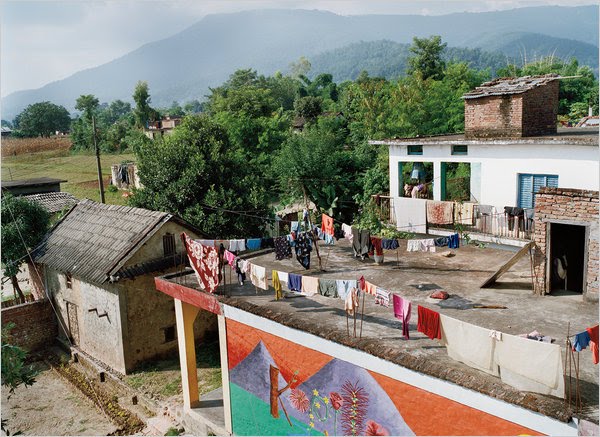
In this video, Nicholas Kristof, a New York Times columnist, tells us about a few inspiring people who took a do-it-yourself approach to foreign aid. These remarkable stories take place in countries such as Nepal and Rwanda, and these stories are further illustrated in the last New York Times Sunday Magazine essay. The video is just a sneak preview into the lives of some of these remarkable entrepreneurs.

-Clare Ortblad

SOURCE: NYTimes

Saturday, October 16, 2010

It's Not All Doom and Gloom...


Melinda Gates tells us why the Bill and Melinda Gates Foundation and the ONE Campaign focus on positive stories. We are so often bogged down with stories of death, disease, and hunger in Africa. It can be overwhelming. But what people so often miss is that in the last decade there have been great successes throughout the world in reducing hunger, combating AIDS, and improving maternal health. We like to think of our blog of a celebration of the progress that has occurred over the last decade. From business entrepreneurs finding innovative ways to sell their products, to mothers knowing their children won't be ravaged by polio, to governments working hard to expel corruption, we want these stories to be what you think of when you think of these nations.

Here are some of the impressive achievements of the last ten years:

  • Between 2001 and 2006, malaria deaths in Eritrea were reduced by 80%
  • A marked increase in condom usage for men between 15-24
  • Measles has nearly been eliminated in sub-Saharan Africa
  • Guinea and Niger have seen primary school enrollment rates double since 2000.
  • Increased access to microfinancing throughout the world
  • AIDS therapy treatment coverage has risen from 1% to 88% between 2003 and 2007
And these are just some of the many, many successes. Yes, there is a lot of work ahead. And yes, there is still unbelievable poverty. But these stories show that there is much to be joyful for.

-Corey Cox

SOURCE: The ONE Blog, World Bank Blog