Showing posts with label Vaccines. Show all posts

Wednesday, September 14, 2011

The Journey of a Vaccine

Living Proof | A Rotavirus Vaccine's Journey from ONE Campaign on Vimeo.


Follow the journey of a vaccine to Nicaragua to prevent rotavirus. This particular virus kills 2 million children a year but will soon be introduced to many of the world's poorest countries.

-Chelsey Dambro

Source: ONE Campaign

Saturday, August 06, 2011

India Uses Mobile Phones To Improve Vaccine Rates


On Tuesday, India's health minister, Ghulam Nabi Azad, announced a new initiative that should help boost the country's immunization of newborns. The initiative will collect mobile phone numbers of all pregnant mothers to monitor their babies vaccines.

The health minister also announced to the WHO in New Deli that the ministry has already been supervising 29 million mobile numbers of pregnant women in India since January.

Babies in India are supposed to be immunized against tuberculosis, polio, diphtheria, tetanus, whooping cough and measles, according to health experts. However, India ranks low globally in its rate of vaccinating the population. In 2010, on 72% of Indian babies received vaccinations. Compared to Bangladesh (95%) and Indonesia (83%) this is extremely poor.

Experts say that India compares so poorly with other countries globally due to its decentralized public health infrastructure and inadequate monitoring of patients, the latter of which is being remedied now!

Through their mobile phones, women are able to be tracked in the future by central or state governments to ensure that their babies are receiving all the immunizations needed. By phoning the mothers, the central government will be able to check on whether the babies are being fully immunized as well as check by district, which babies are not getting the needed vaccines.

-Gabrielle Gurian

SOURCE: WALL STREET JOURNAL

Wednesday, June 15, 2011

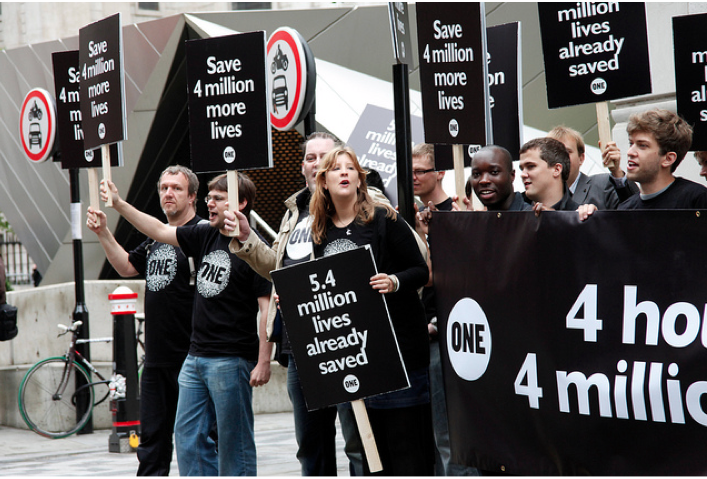
Four Million Children Saved!


For months, the ONE campaign has been asking members to use advocacy tools such as social media and congressional calling to push forward their vaccine campaign. The campaign is said to save 4 million children in five years.

This month 150,000 signatures were reached on the petitions, thousands of calls were made, emails and letters were sent, and facebook and twitter were more than utilized. Because of the hard work and determination of members and active individuals, it worked!

Yesterday in London, USAID Administrator Raj Shah announced that the Obama Administration is committing $450 million over the next three years to the GAVI Alliance. This is the exact amount that ONE requested in funding. This money will be used to immunize more than 250 million children and will avert 4 million premature childhood deaths.

Bono, ONE’s cofounder, summed it up nicely in a quote from today’s press release:

“In most parts of the world diarrhea is a nuisance. In Africa, it can be a death sentence. Too many kids are lacking the medicines we can find at any corner drug store. Vaccines are a global health game-changer. And today, President Obama has said he is in it to win it. Along with strong commitments from others, the goal of saving four million kids in the next few years is within reach. The UK’s David Cameron deserves great credit for leading this powerful effort. Vaccines are simple, powerful, cost-effective tools that can save millions of lives. It’s crazy just how much sense it makes.”

Great job everyone who participated! This is huge! It just shows that when we use our voices and work together, amazing things can happen. Because of everyone's support, millions of kids around the world will have a brighter future!

-Gabrielle Gurian

SOURCE: ONE.ORG

Thursday, June 09, 2011

Drug Firms Cut Vaccine Prices


Life-saving vaccines are becoming cheaper for the developing world. Several major drug firms including, GlaxoSmithKline (GSK), Merck, Johnson & Johnson and Sanofi-Aventis have agreed to cut vaccine prices through the international vaccine alliance, Gavi. These price cuts would be balanced out by higher prices for vaccines in richer countries, and have the promise of saving many lives.

Rotavirus-related diarrhea kills more than 500,000 children a year, and GSK said they would cut the cost of their vaccine for rotavirus by 67%. Andrew Witty, chief executive of GSK explains that their company needs to invest in the next generation of drugs and vaccines, and in order to do that they must be making a profit from current vaccines. However, it is unrealistic to think that some of the poorest countries would be able to contribute to the profit of the drug companies. This should not mean that they do not get to receive the vaccines. Therefore, as Witty explains, richer countries will contribute to the drug company profits for both themselves and the developing world.

Dr. Freddie Coker, a pediatrician in Sierra Leone’s capital says he is excited about the cost cutting. “About 40% of cases we see are due to diarrhea diseases. The mortality rate can be as high as 50%. The earlier a child is commenced on treatment, the better the outcome," said Coker.

Numerous anti-poverty campaigners support these cuts in cost. Jamie Drummond, executive director of campaign group ONE, urges international leaders to act. “Gavi's ambition to save four million lives in the next five years is only achievable if the international donor community steps up to the plate,” said Drummond. These cuts are a promising step in saving thousands of lives!


-Sami Ressler

SOURCE: BBC NEWS

Thursday, May 19, 2011

World AIDS Vaccine Day 2011


Yesterday, May 18, 2011 was the fourteenth annual World AIDS Vaccine Day, marking the anniversary of when President Bill Clinton stated, "Only a truly effective, preventive HIV vaccine can limit and eventually eliminate the threat of AIDS." Thirty years ago, Morbidity and Mortality Weekly Report first identified the HIV/AIDS virus. Today, more than 33 million people are living with the virus with a growing rate of 7,100 people becoming affected each day, many of which are living in severe poverty. The urgency of a preventive AIDS vaccine is greater than ever as the pandemic creates lasting political instability and claims millions of lives each year.

The International AIDS Vaccine Initiative, a global non-profit public-private partnership dedicated to accelerating the development of HIV/AIDS vaccines, reports that over the past thirty decades, extraordinary scientific advances have been made in the fight against AIDS. The United States and Thai governments have discovered through a clinical trial in 2009 that an AIDS vaccine was possible. Action For Global Health stated that this clinical trial, "...revealed that a candidate HIV vaccine regimen had provided volunteers modest-roughly 30%- protection from HIV."

Without the help of thousands of volunteers and donors, the reality of an AIDS vaccine would not be upon us today. The dedication of these individuals to help rid the world of this vicious disease is amazing and demonstrates the power behind movements to help better the lives of millions of people. With continued support from volunteers and donors along with efforts made by the United States government, we can only hope that next year's World AIDS Vaccine Day the world will be celebrating AIDS prevention measures and approaches that significantly reduce and eventually eliminate the AIDS disease.

-Kelsey Christianson

SOURCE: IAVI, ONE, ACTION FOR GLOBAL HEALTH, USAID

Monday, February 14, 2011

Spreading the Love


Today Kenya became the first African country to introduce the pneumococcal vaccine. Hundreds of infants received shots to prevent pneumococcal disease, a disease that takes the lives of over a millions people every year. “Today’s introduction of the pneumococcal vaccine in Kenya is an historic step toward improved health for children in Kenya and in other developing countries,” said Kenya’s minister for Public Health and Sanitation.

Nicaragua, Guyana, Yemen and Sierra Leone will also be pushing the vaccinations with support from the Global Alliance for Vaccines and Immunizations (GAVI). Since 2000, the GAVI has prevented more than five million future deaths and helped protect 288 million children with new and underused vaccines. The GAVI alliance goal is to get enough funding so by 2015 over 40 countries will be introducing the pneumococcal vaccine. They will need to raise US$3.7 billion over the next five years to continue the immunizations in the world’s poorest countries.

~Teal Peterson

SOURCE: Global Alliance for Vaccines and Immunisation (GAVI)

Monday, November 29, 2010

New, Cheap, Meningitis Vaccine Could Prevent Epidemic in Africa


A new meningitis vaccine, costing a fraction of the prices charged by big pharma, could help prevent epidemics in Africa, transforming the way doctors fight outbreaks of the deadly disease.

MenAfriVac protects against type A meningitis, which is attributed to more than 90% of outbreaks in Africa. It was approved by WHO last week, meaning that other agencies, like UNICEF, can now buy it for countries. It costs about 50 cents per dose.

Meningitis is a highly contagious disease which results in a serious infection of the thin lining surrounding the brain and the spinal cord. It can lead to severe brain damage and is fatal in 50 percent of cases if untreated.

The epidemic strikes more than 25 countries in sub- Saharan Africa from Senegal in the west to Somalia in the east. Last year there were 80,000 cases including more than 4,000 deaths. Children and young adults are most at risk.

MenAfriVac will be launched in Burkina Faso on December 6 through collaboration with the WHO. Everyone aged 1–29 — the group hit hardest by the disease, numbering 12.5 million people, will be vaccinated. The program will then reach out to Mali and Niger, which will each vaccinate 4 million people in the same age bracket. The WHO hopes to complete this project that will vaccinate 450 million people in 25 African countries by 2015.

- Martina Georgieva

SOURCE: The Guardian

Saturday, November 06, 2010

Bill Gates on the Successes of Foreign Aid


In a recent interview with Financial Times, Bill Gates -- the world's second richest man and co-chair of the philanthropic Bill & Melinda Gates Foundation -- spoke about foreign aid for development and recent successes of aid in improving quality of life in poor nations.

Gates acknowledged skepticism of foreign aid. He noted the notorious former President of then-Zaire, Mobutu, as an oft-referenced example of how foreign aid has sometimes been funneled to corrupt politicians, like Mobutu, and then wasted. However, Gates argued that examples like this are not arguments against aid, but illustrate the need for greater investment in aid so that it can be channeled effectively.

He went on to highlight several important areas in which foreign aid has produced real results, including improved agricultural production and, especially, great advances in medical technology. He said, "The primary reason we’ve gotten down from twenty million children dying a year to close to eight million is vaccines.” Indeed, the funding of vaccine research has been one of the primary focuses of the Bill & Melinda Gates Foundation.

Interestingly, Gates also discussed the role of political interests in determining where aid money is spent. He criticized former U.S. support of corrupt governments, calling certain instances examples of "Cold War calculation." Similarly, he criticized those that oppose international aid on the grounds that domestic interests are more important. “If all you care about is the US or the UK’s relative strength in the world, then it’s particularly scary,” he said, encouraging the consideration of problems beyond those of our own country. Wise words from the world's most prominent philanthropist.

-Elizabeth Newton


SOURCE: Financial Times

Thursday, October 28, 2010

Bye-Bye to Polio


In the 21st century, polio may be the first disease to be eradicated. Just because we do not hear about polio anymore, does not mean it does not exist. It still does! World Polio Day helps increase awareness worldwide and raise necessary funds. We are extremely close to never seeing this disease ever again!

The massive worldwide vaccination effort over the last 20 years has reduced polio significantly. I'm talking 99% significantly! It does not exist in developed countries but is more prominent in Nigeria, India, Pakistan and Afghanistan.

Due to a massive worldwide vaccination effort over the last 20 years, polio has been reduced by 99% and could be the second major infectious disease, after smallpox, to ever be eradicated. But the disease is still endemic in four countries: Nigeria, India, Pakistan and Afghanistan.

The world is changing, one vaccine at a time!

-Shereen Alibhai

SOURCE: Gatesfoundation

Wednesday, October 27, 2010

Anti-Polio Campaign


Yesterday in Côte d’Ivoire a U.N. supported campaign began in an effort to reach 72 million children across Africa and continue efforts to completely eradicate polio from the continent.

While there is no cure for polio, there is a vaccine. So this week approximately 300,000 health workers are going door-to-door to deliver the oral vaccine to high risk children in 15 countries.

African leaders are all cooperating and synchronizing immunization efforts in order to keep the virus from infecting more people. This government cooperation and support has helped to slash the number of outbreaks. Nigeria, which never fully stopped polio transmission, has reduced the virus by 98% in the past year. Last week Nigeria immunized 30 million more children. The campaign to eradicate polio will also hit Benin, Burkina Faso, Chad, Angola, Sudan, the Democratic Republic of the Congo, Gambia, Guinea, Mali, Mauritania, Senegal, and Sierra Leone.

-Kelli Hanson

SOURCE: UN News

Tuesday, September 28, 2010

Rwanda Combats Pneumonia in Children through Bottom-Up Approach


Today, pneumonia is a leading cause of death in children worldwide, claiming nearly 2 million children under the age of five per year. In Rwanda, the combined commitment of international organizations, health care professionals, and families has led to a decrease in the tragic effects of this widespread condition, due to the introduction of a pneumococcal conjugate vaccine called PCV7.

The vaccine was first introduced in Rwanda in April of 2009 through support from UNICEF and the Global Alliance for Vaccines and Immunizations (GAVI). It helps prevent pneumococcal disease, which is the leading cause of pneumonia itself. Rwanda is the first low-income country to incorporate PCV7 into its routine immunization program.

The success of PCV7 in helping prevent pneumonia thus far is largely due to the community health education that has accompanied introduction of the vaccine. Local officials stress the importance of spreading information about nutrition, family planning, and hygiene, in addition to administering the vaccine itself.

-Elizabeth Newton

SOURCE: UNICEF

Sunday, August 22, 2010

New Rotavirus Vaccines Significantly Reduce Child Deaths


Rotavirus, the most common form of child diarrhea, may have a cure. A recent study out of medical journal The Lancet cites two sets of clinical trials in Asia and Africa confirming that a new rotavirus vaccine can significantly reduce child deaths. The Asian trial took place in Bangladesh and Vietnam where 2,000 infants were tested. The study showed that the vaccine had a 48.3% success rate and when combined with other efforts, such as oral rehydration salts, zinc, exclusive breastfeeding and improved hygiene and sanitation, diarrheal deaths could be reduced even more. The African trial took place in Ghana, Kenya and Mali and had a 64% success rate if the vaccine was administered in the first year of life. While these percentages may not appear to be overwhelmingly high, it should be noted that the vaccines will still have a huge impact on reducing the disease in Africa and Asia because so many more children are dealing with the disease there than in the United States or in Europe where medicine and healthcare can be much more easily administered.

- Clara Hill

Tuesday, August 03, 2010

New meningitis vaccine to be unleashed in Africa this fall


Yesterday, The New York Times reported on a new meningitis vaccine, which costs only $.50 a treatment, that is due for mass distribution in Africa this fall. The vaccine is meant to cheaply, but effectively, target the epidemic that plagues Sub-Saharan Africa every year. The region is home to the "meningitis belt," 25 countries from Ethiopia to Senegal that have the highest rates of meningitis infections in the world. Between 25,000 and 200,000 people are effected by the outbreak every year, most of whom are children. Nearly 10% of infected people die within 48 hours of contracting the disease, with another 20% suffering from brain damage or hearing loss. Seasonal winds spread the highly contagious disease, with most of the cases occurring between February and May.

However, this new vaccine may provide a way for financially strapped African governments to provide an effective solution to the disease. The vaccine was developed under the co-operative efforts of the World Health Organization and PATH, a non-profit based in Seattle that develops treatments for diseases in third world countries. The Bill and Melinda Gates Foundation funded five years of research and trials for the vaccine as well. Meningitis is highly preventable with proper vaccination- many US schools require students to be immunized. The vaccine is due for it's first major distribution in Burkina-Faso this October. However, the number of countries who have access to the medication will be determined by how much donors are able to give.

-Matthew Thwaites

Tuesday, July 27, 2010

Major Victories in Haiti


The UN has stated that "there are few places in the world today where children are as vulnerable as they are in Haiti." However, there have been some major victories. UNICEF has immunized more than 275,000 Haitian children since the country was struck by a devastating earthquake just over six months ago. They hope to reach 500,000 more children during a second round of emergency immunizations. Safe water has been provided to 1.2 million people by UNICEF and partner organizations, nutrition programs have provided food to 550,000 people and 2,000 children with severe acute malnutrition are now receiving therapeutic feeding and care. "Some of the milestones at six months are truly remarkable. So far no increase in malnutrition has been recorded and we have also not seen any major disease outbreaks despite huge challenges in health and sanitation," UNICEF wrote in a report earlier this month. 225 UNICEF-supported Child-Friendly Spaces, designed to offer children a safe space to participate in recreational activities, have also been created and have served 63,000 children.

Monday, July 19, 2010

New patch for vaccines could replace needle method


Yesterday, the BBC reported on a new invention that could replace the traditional needle method for delivering vaccines. The patch, jointly created by researchers from Emory University and the the Georgia Institute of Technology, uses 100 "microneedles" that dissolve the vaccine into the body. At just .65mm in length (about three times the width of a human hair), microneedle injection doesn't have the pain associated with normal needles and doesn't need to be applied by professionals.

Studies using mice and a traditional flu vaccine show that the patch may even be more effective at injecting a vaccine than the traditional needle method. Creators envision the patch being easily and cheaply distributed in areas hit by a pandemic because people can apply the patch themselves. The microneedles are dissolved into the body so there are no dangerous needles left over at the end of the process. Deep injection is not necessary for effective vaccination, because as one Emory University expert said, immune cells lie just below the surface of the skin.

-Matthew Thwaites

Wednesday, May 26, 2010

New Efforts to Combat Measles in Zimbabwe


A new U.N.-backed effort in Zimbabwe will target 5 million children between the ages of 6 and 14 to receive measles immunizations. This move comes in response to a measles outbreak that has already affected 55 of the country's 62 districts. Peter Salama, Zimbabwe's representative U.N. Children's Fund (UNICEF) hopes that "we can use the outbreak to improve Zimbabwe's health sector." In addition to the mass immunizations, the new effort will also provide children with Vitamin-A supplements.

-Andrew Oestreich

Saturday, April 03, 2010

UK Doubles Funding to GAVI Alliance


In a newly invigorated pledge of support, the United Kingdom pledged GBP 150 million to the GAVI Alliance in an effort to increase vaccinations and immunizations to people in developing countries.

Such an act represents a ringing endorsement to the public-private partnership that the GAVI organization thrives on.

This support by the UK will help GAVI prevent 4.2 million additional future deaths from now until 2015, and make a significant contribution to achieving the Millennium Development Goals (MDGs).

GAVI will use the UK funding to help developing countries gain access to vaccines with the greatest potential to achieve progress on the MDGs.

To learn more about the GAVI Alliance and their great work go to their website.

- Tiffanie Depew

SOURCE: GAVI Alliance

Tuesday, February 09, 2010

Progress of first ever malaria vaccine

Last June we blogged about the British drug giant Glaxo Smith Kline's trial phase of the world's first vaccine against malaria. Here's an update...

The vaccine invented and made by the Walter Reed Army Institute of Research and formulated with GSK Biologicals, appears to show promise in children, producing a 100-fold increase in antibodies to fight the virus.

The efforts being put forth by GSK and the Walter Reed Army Institute are in line with Millennium Development Goal #6 - to reduce HIV / AIDS, Malaria, and other diseases by the year 2015.

- Sofia Nazalya

SOURCE: Reuters

Tuesday, May 12, 2009

Recent Meningitis Epidemic


Throughout sub-Saharan Africa, nearly 2,000 people have died since January from meningitis. Doctors Without Borders (MSF) are currently working on their biggest vaccination campaign ever to solve this epidemic, vaccinating about 7 million people. The disease is a bacterial infection of the brain membrane, and if left untreated, it has a very high mortality rate. As the world focuses on solving the problem of HIV/AIDS and malaria, it's important to remember that there are other deadly diseases out there that need our attention.
Source: DoctorsWithoutBorders.org