
Showing posts with label US leadership. Show all posts

Monday, August 08, 2011

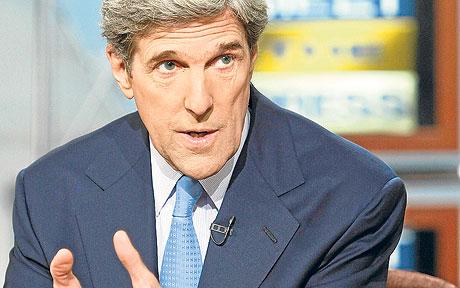
Sen. John Kerry On Foreign Aid


Sen. John Kerry recently wrote a piece as part of a leadership roundtable on US Foreign Aid. He wrote it in light of the crisis in Somalia.

He writes, "At this time of budget crisis, a United States senator defending foreign aid might well be advised to get examined by a political consultant if not a mental health professional. But right now it is more urgent than ever that those of us who believe in robust American leadership step up and articulate the dangers of American retrenchment."

He goes on to explain that many question whether the United States can afford foreign aid and development investments-- however, in reality, "it is that we can't afford not to."

He gives several reasons why. First, global leadership is a strategic imperative for America. It is not simply a favor we do for other countries. "It amplifies America's voice and extends our reach." In a world that is growing more and more interdependent, "slashing foreign aid is a formula for isolation and shrinking influence."

"America cannot just opt out of a networked world."

Is there a cost? Of course there is. However, all foreign aid programs, including sending diplomats to Afghanistan, reversing the HIV/AIDS epidemic in Africa and assisting Somalia during their recent devastating drought, add up to less than 1 percent of the annual budget. "It is a very small investment for such a great return."

"This year alone we will spend approximately $700 billion on our military. The entire international affairs budget is one-tenth of that. If you took the whole Foreign Service roster, you could barley staff one aircraft carrier." That is how little we spend on foreign aid.

Yet, diplomats are serving on front lines of multiple revolutions and wars and making extremely vital contributions in Afghanistan and Iraq.

"Surely, in a tax code spanning more than 72,000 pages of expenditures, many of which are proven to generate absolutely NO economic activity, we can find the cuts to preserve our investment in reducing security threats, in opening markets for American businesses and in creating opportunities for American leadership."

Kerry concluded with this statement. "Building our nations civilian capacity and providing our diplomatic corps with the essential tools to succeed in the demanding jobs we continually require of them is essential."

"To get the job done, we need our diplomats."

-Gabrielle Gurian


Monday, July 18, 2011

Hillary Clinton: US Foreign Investment As A Strategic Investment

Secretary of State Hillary Rodham Clinton delivered an address at the 2011 US Global Leadership Coalition Washington Conference, July 13th.

During her speech she congratulates the Coalition on their newest report, America's Global Leadership: A Strategic Investment For US Jobs. The report stresses the connection between job creation here in the US and around the world.

"Diplomacy and development abroad, help our economy at home."

Since the economic decline, the quest for job creation and economic development has been on everyones minds. This quest though does not end at our boarders, as Clinton states.

"For almost two and a half years I have been the Secretary of State," Clinton says, "I have traveled 600,000 miles and have reached one overarching conclusion. Simply put, we need to up our game"

This means tapping into developing/foreign markets. During the speech Hillary Clinton gives a list of ways the State Department and USAID are doing just that, using tools of foreign policy to create jobs at home. However, she notes the level of difficulty that comes along with this task. Other countries around the world give significantly higher amounts of global aid to their businesses and because of that are more competitive.

1. The State and USAID are engaged in Commercial Diplomacy, which leverages our global presence to help our companies compete and win.
2. Paying more attention to small and medium size businesses
3. State Department is sending Ambassadors to different countries to educate US cities about job/export opportunities in other countries.
4. The Commercial Diplomacy sector is trying to move past border/trade restrictions in foreign countries.
3. Part of Commercial Diplomacy also helps companies become more creative in their selling habits.
4. We try to promote trade to open new markets abroad and create jobs at home.

"I know two things about trade," states Clinton, "It is a polarizing political issue, but done right, it creates American jobs."

"While our economic competitors are signing bilateral trade deals with other countries, the free trade deals now working their way through congress have the potential to create tens of thousands of American jobs."

-Gabrielle Gurian