Showing posts with label Malnutrition. Show all posts

Tuesday, December 13, 2011

State of Silent Crisis

Urgent action needs to take place now for mortality rates in Central African Republic (CAR) are skyrocketing through the roof.  Medecins Sans Frontieres (MSF), medical aid group, has come forth and called on donor governments and development agencies to come through with their commitments of foreign assistance, whether it be through funds or humanitarian acts.  As one of world's poorest countries, ranking 179 out of 187 countries in the 2011 UN Human Development Index, life expectancy in CAR is 48 (second lowest in the world).  Cause of most deaths?  Malnutrition and diseases, like malaria, HIV and Aids, that could have been prevented or treated if necessary resources were at their disposal.  Also, with the notorious workings of Lord's Resistance Army (LRA), violence, rape, and abduction are contributing factors to the high death rates.  

Sure, health funding is allocated, but it appears that international donors are becoming less involved dropping from $39m in 2005 to $9.9m in 2009.  So, the issue at hand, accountability.  People need to start stepping up to the plate and be good on their commitments for their lives are ultimately in your hands.    

Sean Healey, MSF humanitarian affairs officer, said "The Central African Republican falls into the category of forgotten crises.  It is not receiving the humanitarian commitment that it should."

-Georisa Chang

SOURCE: The Guardian

Saturday, September 03, 2011

More than 200,000 Are In Mortal Danger In South Kordofan


Due to continuous humanitarian aid restriction by the government, more than 200,000 people in South Kordofan of Sudan will suffer severe malnutrition and mortality if actions are not taken. U.N. Under-Secretary-General for Humanitarian Affairs Valerie Amos warned that essential supplies have already been depleted in many parts of South Kordofan, where government forces have been fighting with the Sudan People’s Liberation Army North (SPLA-N). The situation has been worsened by the Sudanese government’s humanitarian assistance restriction as the government refused to allow international agencies to replenish stocks and deploy personnel for the past six weeks.

Amos’ appeal repeats EU aid commissioner Kristalina Georgieva and EU foreign affairs chief Catherine Ashton’s pleas which calls for the lifting of aid restrictions to South Kordofan. The Sudanese government and the SPLA-N are requested to lift restrictions on humanitarian organizations so they can deliver aid to people in need and avoid this big tragedy.

-Nisha Noor

SOURCE: DEVEX

Thursday, February 24, 2011

New Food Product Is Protecting Children From Malnutrition In Pakistan


After the terrible flooding in Pakistan recently, millions of people were displaced from their homes and left without reliable sources of food. The most at risk were children, who often suffer more than anyone during natural disasters like this. Thankfully, an innovative new food product has been developed inside Pakistan that is giving thousands of children the nutrition they need to protect them from hunger and malnutrition. The new food product, a chickpea paste, is currently being provided to children all over Pakistan that have insufficient access to healthy supplies of food. Created by the World Food Programme (WFP), the paste, called Wawa Mum, contains a day's worth of vitamins and nutrients within one small packet, cutting out the need for any extra eating utensils. The advantages of this Wawa Mum paste are that it's super light, can be consumed at any time, and it's made locally in Pakistan from ingredients that people like and are familiar with. All of this adds up to a growing demand for the chickpea paste, with the rise of food and malnutrition emergencies in the region. Dominique Frankefort, Deputy Director of WFP's operations in Pakistan, is aiming to increase production to 500 metric tons per month by June and to 1,000 metric tons by the end of the year. Increased production not only benefits the millions of children suffering from malnutrition in Pakistan, but also the food processing sector, where jobs are being created at an alarming rate during a time of dire need for the country.

- Brock McNairy

Friday, July 30, 2010

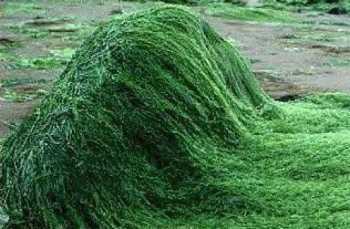
Algae in Chad boosts incomes and reduces malnutrition


A protein-rich blue-green algae called Spirulina (referred to as "dihé" by locals) in Chad is allowing disadvantaged women to increase their incomes and reduce hunger in their home villages. The spirulina, which is gathered from the northeastern shore of Lake Chad, is helping to feed the 1 in 5 children in Chad who are malnourished. Traditionally, the algae is gathered by lower class women of the "Blacksmith" caste during certain times of the year. Normally it is prepared by drying the algae into a thin biscuit and subsequently turned into a bitter tasting paste.

In 2007, the European Union created a $1.7 million agency, which is now run by the UN Food and Agricultural Association, to provide education and equipment for the women on how to most efficiently gather, process, and market the algae. Since the agency began, more than 10 tons of the dihé has been sold to pharmacies and groceries around the country, resulting in over $100,000 in profits for the 500 women working at the project (around $200 per worker). The average per capita income in Chad is less than $170 per person.

Mahamat Sorto, the FAO coordinator for the project, claims that the dihé from the Chad soda-lakes is more nutritious than than the spirulina sold in developed countries and costs about 100 times less. Moreover, up to ten times more of the dihé can be gathered without adversely affecting the ecological balance of the algae. For the algae to grow, it needs brackish pools of water and a very specific type of climate that involves temperatures in the upper-90s (fahrenheit) during the day and the mid-60s during the night. Chad is one of the few areas in the world where this algae can grow.

-Matthew Thwaites

Tuesday, July 14, 2009

Prevent Malnutrition


According to Nicolas de Torrente, the Executive Director of Doctors Without Borders U.S.A, in a letter to the editor of the New York Times, the quality of food children intake after the age of exclusive breast-feeding is just as important as the quantity. To maintain health and spurn growth, children between the ages of 6 and 24 months need energy from grains and fats, along with essential nutrients found in animal-source proteins like milk.

“In ‘malnutrition hot spots' like the Sahel, East Africa and South Asia, where most of the world's five million malnutrition-related deaths occur each year, poor families already struggle, and often fail, to provide their children with such varied diets,” said Torrente.

The director of Doctors Without Borders believes it is critical to improve the World Food Program’s ability to distribute general food as the global food crisis carries on.

“But increasing the quantity of food aid is not enough,” said Torrente. “Stemming and reversing the high rate of malnutrition-related deaths in the young should be a top priority.”

By providing “ready-to-use” nutrient-rich and dense foods as well as other nutritional supplements targeted to the specific needs of small children, Torrente is convinced of a promising impact.

“Enhancing existing food aid with these supplements may increase the global cost of food aid, but if the world truly seeks to contain this growing crisis, this cannot be seen as a luxury,” said Torrente.

-- Jaimie Hwang

Source: Doctors without Borders